•  
Tie-Dye Technique Of Bai Ethnic Group - Chin

Tie-Dye Technique Of Bai Ethnic Group - Chin

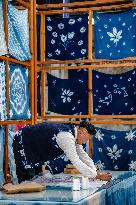
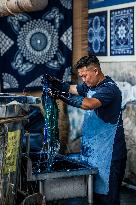
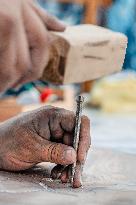
Duan Yuan, an inheritor of the tie-dye technique of Bai ethnic group, makes tie-dye designs in a dyehouse in Zhoucheng Village of Dali Bai Autonomous Prefecture, southwest China's Yunnan Province, November 21, 2025. Known as the hometown of the tie-dye technique of Bai ethnic group, Zhoucheng Village hosts over 200 households engaging in tie-dye businesses, with the number of employees exceeding 4,000. As a traditional folk technique of the Bai ethnic group, tie-dye boasts a history spanning over a thousand years and was included in the first batch of China's national intangible cultural heritage list in 2006. Tying and dyeing are the core steps in the process of making indigo tie-dye products. Artisans use needles and threads to create various patterns on the fabric, which are then dyed with plant-based dyes, resulting in blue backgrounds adorned with vivid white patterns. Photo by Hu Chao/Xinhua/ABACAPRESS.COM

  •  
Tie-Dye Technique Of Bai Ethnic Group - Chin

Tie-Dye Technique Of Bai Ethnic Group - Chin

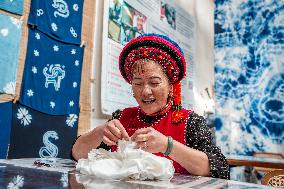
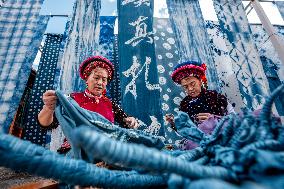
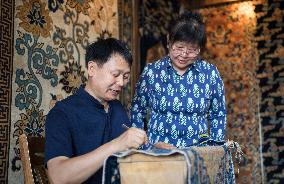
Duan Yinmei, an inheritor of the tie-dye technique of Bai ethnic group, creates knots on fabrics in a dyehouse in Zhoucheng Village of Dali Bai Autonomous Prefecture, southwest China's Yunnan Province, November 21, 2025. Known as the hometown of the tie-dye technique of Bai ethnic group, Zhoucheng Village hosts over 200 households engaging in tie-dye businesses, with the number of employees exceeding 4,000. As a traditional folk technique of the Bai ethnic group, tie-dye boasts a history spanning over a thousand years and was included in the first batch of China's national intangible cultural heritage list in 2006. Tying and dyeing are the core steps in the process of making indigo tie-dye products. Artisans use needles and threads to create various patterns on the fabric, which are then dyed with plant-based dyes, resulting in blue backgrounds adorned with vivid white patterns. Photo by Hu Chao/Xinhua/ABACAPRESS.COM

  •  
Tie-Dye Technique Of Bai Ethnic Group - Chin

Tie-Dye Technique Of Bai Ethnic Group - Chin

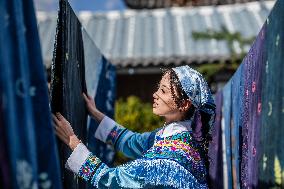
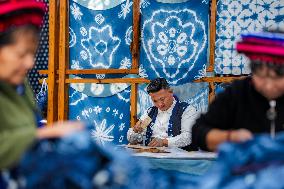
A woman experiences the tie-dye technique of Bai ethnic group in a dyehouse in Zhoucheng Village of Dali Bai Autonomous Prefecture, southwest China's Yunnan Province, November 21, 2025. Known as the hometown of the tie-dye technique of Bai ethnic group, Zhoucheng Village hosts over 200 households engaging in tie-dye businesses, with the number of employees exceeding 4,000. As a traditional folk technique of the Bai ethnic group, tie-dye boasts a history spanning over a thousand years and was included in the first batch of China's national intangible cultural heritage list in 2006. Tying and dyeing are the core steps in the process of making indigo tie-dye products. Artisans use needles and threads to create various patterns on the fabric, which are then dyed with plant-based dyes, resulting in blue backgrounds adorned with vivid white patterns. Photo by Hu Chao/Xinhua/ABACAPRESS.COM

  •  
Tie-Dye Technique Of Bai Ethnic Group - Chin

Tie-Dye Technique Of Bai Ethnic Group - Chin

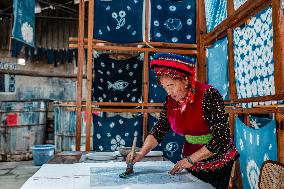
Duan Yinmei, an inheritor of the tie-dye technique of Bai ethnic group, dyes patterns on fabrics in a dyehouse in Zhoucheng Village of Dali Bai Autonomous Prefecture, southwest China's Yunnan Province, November 21, 2025. Known as the hometown of the tie-dye technique of Bai ethnic group, Zhoucheng Village hosts over 200 households engaging in tie-dye businesses, with the number of employees exceeding 4,000. As a traditional folk technique of the Bai ethnic group, tie-dye boasts a history spanning over a thousand years and was included in the first batch of China's national intangible cultural heritage list in 2006. Tying and dyeing are the core steps in the process of making indigo tie-dye products. Artisans use needles and threads to create various patterns on the fabric, which are then dyed with plant-based dyes, resulting in blue backgrounds adorned with vivid white patterns. Photo by Hu Chao/Xinhua/ABACAPRESS.COM

  •  
Tie-Dye Technique Of Bai Ethnic Group - Chin

Tie-Dye Technique Of Bai Ethnic Group - Chin

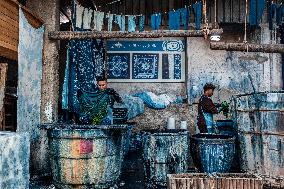
Duan Yuan, an inheritor of the tie-dye technique of Bai ethnic group, rinses dyed fabrics in a dyehouse in Zhoucheng Village of Dali Bai Autonomous Prefecture, southwest China's Yunnan Province, November 21, 2025. Known as the hometown of the tie-dye technique of Bai ethnic group, Zhoucheng Village hosts over 200 households engaging in tie-dye businesses, with the number of employees exceeding 4,000. As a traditional folk technique of the Bai ethnic group, tie-dye boasts a history spanning over a thousand years and was included in the first batch of China's national intangible cultural heritage list in 2006. Tying and dyeing are the core steps in the process of making indigo tie-dye products. Artisans use needles and threads to create various patterns on the fabric, which are then dyed with plant-based dyes, resulting in blue backgrounds adorned with vivid white patterns. Photo by Hu Chao/Xinhua/ABACAPRESS.COM

  •  
Tie-Dye Technique Of Bai Ethnic Group - Chin

Tie-Dye Technique Of Bai Ethnic Group - Chin

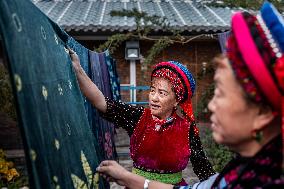
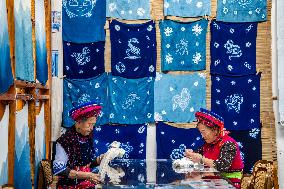
Duan Yinmei (L), an inheritor of the tie-dye technique of Bai ethnic group, and handicraftsman Duan Lilan dry tie-dye fabrics in a dyehouse in Zhoucheng Village of Dali Bai Autonomous Prefecture, southwest China's Yunnan Province, November 21, 2025. Known as the hometown of the tie-dye technique of Bai ethnic group, Zhoucheng Village hosts over 200 households engaging in tie-dye businesses, with the number of employees exceeding 4,000. As a traditional folk technique of the Bai ethnic group, tie-dye boasts a history spanning over a thousand years and was included in the first batch of China's national intangible cultural heritage list in 2006. Tying and dyeing are the core steps in the process of making indigo tie-dye products. Artisans use needles and threads to create various patterns on the fabric, which are then dyed with plant-based dyes, resulting in blue backgrounds adorned with vivid white patterns. Photo by Hu Chao/Xinhua/ABACAPRESS.COM

  •  
Tie-Dye Technique Of Bai Ethnic Group - Chin

Tie-Dye Technique Of Bai Ethnic Group - Chin

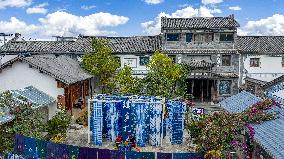
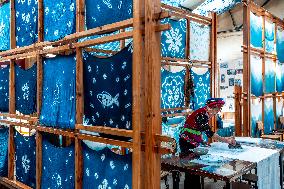
An aerial drone photo shows a scene at a dyehouse in Zhoucheng Village of Dali Bai Autonomous Prefecture, southwest China's Yunnan Province, November 21, 2025. Known as the hometown of the tie-dye technique of Bai ethnic group, Zhoucheng Village hosts over 200 households engaging in tie-dye businesses, with the number of employees exceeding 4,000. As a traditional folk technique of the Bai ethnic group, tie-dye boasts a history spanning over a thousand years and was included in the first batch of China's national intangible cultural heritage list in 2006. Tying and dyeing are the core steps in the process of making indigo tie-dye products. Artisans use needles and threads to create various patterns on the fabric, which are then dyed with plant-based dyes, resulting in blue backgrounds adorned with vivid white patterns. Photo by Hu Chao/Xinhua/ABACAPRESS.COM

  •  
Tie-Dye Technique Of Bai Ethnic Group - Chin

Tie-Dye Technique Of Bai Ethnic Group - Chin

Duan Yinmei (L), an inheritor of the tie-dye technique of Bai ethnic group, and handicraftsman Duan Lilan untie knots on fabrics in a dyehouse in Zhoucheng Village of Dali Bai Autonomous Prefecture, southwest China's Yunnan Province, November 21, 2025. Known as the hometown of the tie-dye technique of Bai ethnic group, Zhoucheng Village hosts over 200 households engaging in tie-dye businesses, with the number of employees exceeding 4,000. As a traditional folk technique of the Bai ethnic group, tie-dye boasts a history spanning over a thousand years and was included in the first batch of China's national intangible cultural heritage list in 2006. Tying and dyeing are the core steps in the process of making indigo tie-dye products. Artisans use needles and threads to create various patterns on the fabric, which are then dyed with plant-based dyes, resulting in blue backgrounds adorned with vivid white patterns. Photo by Hu Chao/Xinhua/ABACAPRESS.COM

  •  
Tie-Dye Technique Of Bai Ethnic Group - Chin

Tie-Dye Technique Of Bai Ethnic Group - Chin

Duan Yinmei (L), an inheritor of the tie-dye technique of Bai ethnic group, and handicraftsman Duan Lilan untie knots on fabrics in a dyehouse in Zhoucheng Village of Dali Bai Autonomous Prefecture, southwest China's Yunnan Province, November 21, 2025. Known as the hometown of the tie-dye technique of Bai ethnic group, Zhoucheng Village hosts over 200 households engaging in tie-dye businesses, with the number of employees exceeding 4,000. As a traditional folk technique of the Bai ethnic group, tie-dye boasts a history spanning over a thousand years and was included in the first batch of China's national intangible cultural heritage list in 2006. Tying and dyeing are the core steps in the process of making indigo tie-dye products. Artisans use needles and threads to create various patterns on the fabric, which are then dyed with plant-based dyes, resulting in blue backgrounds adorned with vivid white patterns. Photo by Hu Chao/Xinhua/ABACAPRESS.COM

  •  
Tie-Dye Technique Of Bai Ethnic Group - Chin

Tie-Dye Technique Of Bai Ethnic Group - Chin

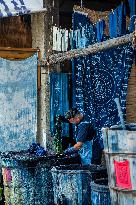
Duan Yuan (L), an inheritor of the tie-dye technique of Bai ethnic group, dyes fabrics in a dyehouse in Zhoucheng Village of Dali Bai Autonomous Prefecture, southwest China's Yunnan Province, November 21, 2025. Known as the hometown of the tie-dye technique of Bai ethnic group, Zhoucheng Village hosts over 200 households engaging in tie-dye businesses, with the number of employees exceeding 4,000. As a traditional folk technique of the Bai ethnic group, tie-dye boasts a history spanning over a thousand years and was included in the first batch of China's national intangible cultural heritage list in 2006. Tying and dyeing are the core steps in the process of making indigo tie-dye products. Artisans use needles and threads to create various patterns on the fabric, which are then dyed with plant-based dyes, resulting in blue backgrounds adorned with vivid white patterns. Photo by Hu Chao/Xinhua/ABACAPRESS.COM

  •  
Tie-Dye Technique Of Bai Ethnic Group - Chin

Tie-Dye Technique Of Bai Ethnic Group - Chin

Duan Yuan, an inheritor of the tie-dye technique of Bai ethnic group, makes tie-dye designs in a dyehouse in Zhoucheng Village of Dali Bai Autonomous Prefecture, southwest China's Yunnan Province, November 21, 2025. Known as the hometown of the tie-dye technique of Bai ethnic group, Zhoucheng Village hosts over 200 households engaging in tie-dye businesses, with the number of employees exceeding 4,000. As a traditional folk technique of the Bai ethnic group, tie-dye boasts a history spanning over a thousand years and was included in the first batch of China's national intangible cultural heritage list in 2006. Tying and dyeing are the core steps in the process of making indigo tie-dye products. Artisans use needles and threads to create various patterns on the fabric, which are then dyed with plant-based dyes, resulting in blue backgrounds adorned with vivid white patterns. Photo by Hu Chao/Xinhua/ABACAPRESS.COM

  •  
Tie-Dye Technique Of Bai Ethnic Group - Chin

Tie-Dye Technique Of Bai Ethnic Group - Chin

Duan Yuan, an inheritor of the tie-dye technique of Bai ethnic group, dyes fabrics in a dyehouse in Zhoucheng Village of Dali Bai Autonomous Prefecture, southwest China's Yunnan Province, November 21, 2025. Known as the hometown of the tie-dye technique of Bai ethnic group, Zhoucheng Village hosts over 200 households engaging in tie-dye businesses, with the number of employees exceeding 4,000. As a traditional folk technique of the Bai ethnic group, tie-dye boasts a history spanning over a thousand years and was included in the first batch of China's national intangible cultural heritage list in 2006. Tying and dyeing are the core steps in the process of making indigo tie-dye products. Artisans use needles and threads to create various patterns on the fabric, which are then dyed with plant-based dyes, resulting in blue backgrounds adorned with vivid white patterns. Photo by Hu Chao/Xinhua/ABACAPRESS.COM

  •  
Tie-Dye Technique Of Bai Ethnic Group - Chin

Tie-Dye Technique Of Bai Ethnic Group - Chin

Duan Yuan, an inheritor of the tie-dye technique of Bai ethnic group, dyes fabrics in a dyehouse in Zhoucheng Village of Dali Bai Autonomous Prefecture, southwest China's Yunnan Province, November 21, 2025. Known as the hometown of the tie-dye technique of Bai ethnic group, Zhoucheng Village hosts over 200 households engaging in tie-dye businesses, with the number of employees exceeding 4,000. As a traditional folk technique of the Bai ethnic group, tie-dye boasts a history spanning over a thousand years and was included in the first batch of China's national intangible cultural heritage list in 2006. Tying and dyeing are the core steps in the process of making indigo tie-dye products. Artisans use needles and threads to create various patterns on the fabric, which are then dyed with plant-based dyes, resulting in blue backgrounds adorned with vivid white patterns. Photo by Hu Chao/Xinhua/ABACAPRESS.COM

  •  
Tie-Dye Technique Of Bai Ethnic Group - Chin

Tie-Dye Technique Of Bai Ethnic Group - Chin

Duan Yuan, an inheritor of the tie-dye technique of Bai ethnic group, makes tie-dye designs in a dyehouse in Zhoucheng Village of Dali Bai Autonomous Prefecture, southwest China's Yunnan Province, November 21, 2025. Known as the hometown of the tie-dye technique of Bai ethnic group, Zhoucheng Village hosts over 200 households engaging in tie-dye businesses, with the number of employees exceeding 4,000. As a traditional folk technique of the Bai ethnic group, tie-dye boasts a history spanning over a thousand years and was included in the first batch of China's national intangible cultural heritage list in 2006. Tying and dyeing are the core steps in the process of making indigo tie-dye products. Artisans use needles and threads to create various patterns on the fabric, which are then dyed with plant-based dyes, resulting in blue backgrounds adorned with vivid white patterns. Photo by Hu Chao/Xinhua/ABACAPRESS.COM

  •  
Tie-Dye Technique Of Bai Ethnic Group - Chin

Tie-Dye Technique Of Bai Ethnic Group - Chin

Duan Yinmei, an inheritor of the tie-dye technique of Bai ethnic group, unties knots on fabrics in a dyehouse in Zhoucheng Village of Dali Bai Autonomous Prefecture, southwest China's Yunnan Province, November 21, 2025. Known as the hometown of the tie-dye technique of Bai ethnic group, Zhoucheng Village hosts over 200 households engaging in tie-dye businesses, with the number of employees exceeding 4,000. As a traditional folk technique of the Bai ethnic group, tie-dye boasts a history spanning over a thousand years and was included in the first batch of China's national intangible cultural heritage list in 2006. Tying and dyeing are the core steps in the process of making indigo tie-dye products. Artisans use needles and threads to create various patterns on the fabric, which are then dyed with plant-based dyes, resulting in blue backgrounds adorned with vivid white patterns. Photo by Hu Chao/Xinhua/ABACAPRESS.COM

  •  
Tie-Dye Technique Of Bai Ethnic Group - Chin

Tie-Dye Technique Of Bai Ethnic Group - Chin

Duan Yinmei, an inheritor of the tie-dye technique of Bai ethnic group, dyes patterns on fabrics in a dyehouse in Zhoucheng Village of Dali Bai Autonomous Prefecture, southwest China's Yunnan Province, November 21, 2025. Known as the hometown of the tie-dye technique of Bai ethnic group, Zhoucheng Village hosts over 200 households engaging in tie-dye businesses, with the number of employees exceeding 4,000. As a traditional folk technique of the Bai ethnic group, tie-dye boasts a history spanning over a thousand years and was included in the first batch of China's national intangible cultural heritage list in 2006. Tying and dyeing are the core steps in the process of making indigo tie-dye products. Artisans use needles and threads to create various patterns on the fabric, which are then dyed with plant-based dyes, resulting in blue backgrounds adorned with vivid white patterns. Photo by Hu Chao/Xinhua/ABACAPRESS.COM

  •  
Tie-Dye Technique Of Bai Ethnic Group - Chin

Tie-Dye Technique Of Bai Ethnic Group - Chin

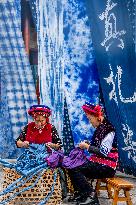
Duan Yinmei (R), an inheritor of the tie-dye technique of Bai ethnic group, and handicraftsman Duan Lilan create knots on fabrics in a dyehouse in Zhoucheng Village of Dali Bai Autonomous Prefecture, southwest China's Yunnan Province, November 21, 2025. Known as the hometown of the tie-dye technique of Bai ethnic group, Zhoucheng Village hosts over 200 households engaging in tie-dye businesses, with the number of employees exceeding 4,000. As a traditional folk technique of the Bai ethnic group, tie-dye boasts a history spanning over a thousand years and was included in the first batch of China's national intangible cultural heritage list in 2006. Tying and dyeing are the core steps in the process of making indigo tie-dye products. Artisans use needles and threads to create various patterns on the fabric, which are then dyed with plant-based dyes, resulting in blue backgrounds adorned with vivid white patterns. Photo by Hu Chao/Xinhua/ABACAPRESS.COM

  •  
(MASTER OF CRAFTS) CHINA-BEIJING-PALACE CARPET-INHERITOR-STUDIO (CN)

(MASTER OF CRAFTS) CHINA-BEIJING-PALACE CARPET-INHERITOR-STUDIO (CN)

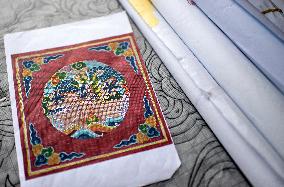
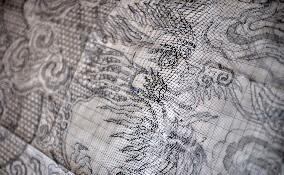
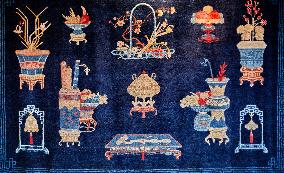
(240629) -- BEIJING, June 29, 2024 Photo by Xinhua/ABACAPRESS.COM) -- This photo taken on June 27, 2024 shows a design pattern of a palace carpet displayed at the studio of Ji Yu in Beijing, capital of China. Beijing palace carpet is a splendid example of China's traditional carpet weaving techniques. Known for its intricate production processes and beautiful patterns, the palace carpet represents the pinnacle of Chinese weaving artistry. The production involves four main steps: dyeing with traditional Chinese herbs, pattern design, weaving and shaping, and finally, finishing touches. As one of the "Beijing Eight Imperial Handicrafts," the art of palace carpet was designated a national intangible cultural heritage in 2008. Ji Yu, born in 1971 in central China's Henan Province, has dedicated over 30 years to the repair and creation of traditional palace carpets. In 1995, along with her husband Li Dongyang, she moved to Beijing to specialize in restoring ancient carpets. Over the years, the couple has insisted

  •  
(MASTER OF CRAFTS) CHINA-BEIJING-PALACE CARPET-INHERITOR-STUDIO (CN)

(MASTER OF CRAFTS) CHINA-BEIJING-PALACE CARPET-INHERITOR-STUDIO (CN)

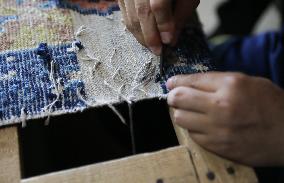
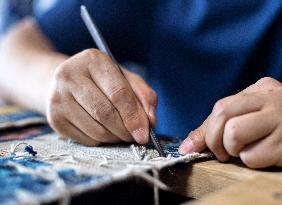
(240629) -- BEIJING, June 29, 2024 Photo by Xinhua/ABACAPRESS.COM) -- Ji Yu's husband Li Dongyang repairs a palace carpet at her studio in Beijing, capital of China, June 27, 2024. Beijing palace carpet is a splendid example of China's traditional carpet weaving techniques. Known for its intricate production processes and beautiful patterns, the palace carpet represents the pinnacle of Chinese weaving artistry. The production involves four main steps: dyeing with traditional Chinese herbs, pattern design, weaving and shaping, and finally, finishing touches. As one of the "Beijing Eight Imperial Handicrafts," the art of palace carpet was designated a national intangible cultural heritage in 2008. Ji Yu, born in 1971 in central China's Henan Province, has dedicated over 30 years to the repair and creation of traditional palace carpets. In 1995, along with her husband Li Dongyang, she moved to Beijing to specialize in restoring ancient carpets. Over the years, the couple has insisted on traditional dyeing and we

  •  
(MASTER OF CRAFTS) CHINA-BEIJING-PALACE CARPET-INHERITOR-STUDIO (CN)

(MASTER OF CRAFTS) CHINA-BEIJING-PALACE CARPET-INHERITOR-STUDIO (CN)

(240629) -- BEIJING, June 29, 2024 Photo by Xinhua/ABACAPRESS.COM) -- Wang Guoying sits on a palace carpet at the studio of Ji Yu in Beijing, capital of China, June 27, 2024. Beijing palace carpet is a splendid example of China's traditional carpet weaving techniques. Known for its intricate production processes and beautiful patterns, the palace carpet represents the pinnacle of Chinese weaving artistry. The production involves four main steps: dyeing with traditional Chinese herbs, pattern design, weaving and shaping, and finally, finishing touches. As one of the "Beijing Eight Imperial Handicrafts," the art of palace carpet was designated a national intangible cultural heritage in 2008. Ji Yu, born in 1971 in central China's Henan Province, has dedicated over 30 years to the repair and creation of traditional palace carpets. In 1995, along with her husband Li Dongyang, she moved to Beijing to specialize in restoring ancient carpets. Over the years, the couple has insisted on traditional dyeing and weaving

  •  
(MASTER OF CRAFTS) CHINA-BEIJING-PALACE CARPET-INHERITOR-STUDIO (CN)

(MASTER OF CRAFTS) CHINA-BEIJING-PALACE CARPET-INHERITOR-STUDIO (CN)

(240629) -- BEIJING, June 29, 2024 Photo by Xinhua/ABACAPRESS.COM) -- This photo taken on June 27, 2024 shows a palace carpet waiting for repair at the studio of Ji Yu in Beijing, capital of China. Beijing palace carpet is a splendid example of China's traditional carpet weaving techniques. Known for its intricate production processes and beautiful patterns, the palace carpet represents the pinnacle of Chinese weaving artistry. The production involves four main steps: dyeing with traditional Chinese herbs, pattern design, weaving and shaping, and finally, finishing touches. As one of the "Beijing Eight Imperial Handicrafts," the art of palace carpet was designated a national intangible cultural heritage in 2008. Ji Yu, born in 1971 in central China's Henan Province, has dedicated over 30 years to the repair and creation of traditional palace carpets. In 1995, along with her husband Li Dongyang, she moved to Beijing to specialize in restoring ancient carpets. Over the years, the couple has insisted on traditio

  •  
(MASTER OF CRAFTS) CHINA-BEIJING-PALACE CARPET-INHERITOR-STUDIO (CN)

(MASTER OF CRAFTS) CHINA-BEIJING-PALACE CARPET-INHERITOR-STUDIO (CN)

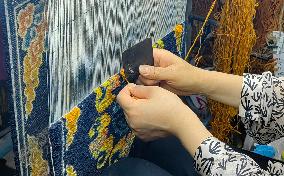
(240629) -- BEIJING, June 29, 2024 Photo by Xinhua/ABACAPRESS.COM) -- Wang Guoying repairs a palace carpet at the studio of Ji Yu in Beijing, capital of China, June 27, 2024. Beijing palace carpet is a splendid example of China's traditional carpet weaving techniques. Known for its intricate production processes and beautiful patterns, the palace carpet represents the pinnacle of Chinese weaving artistry. The production involves four main steps: dyeing with traditional Chinese herbs, pattern design, weaving and shaping, and finally, finishing touches. As one of the "Beijing Eight Imperial Handicrafts," the art of palace carpet was designated a national intangible cultural heritage in 2008. Ji Yu, born in 1971 in central China's Henan Province, has dedicated over 30 years to the repair and creation of traditional palace carpets. In 1995, along with her husband Li Dongyang, she moved to Beijing to specialize in restoring ancient carpets. Over the years, the couple has insisted on traditional dyeing and weaving

  •  
(MASTER OF CRAFTS) CHINA-BEIJING-PALACE CARPET-INHERITOR-STUDIO (CN)

(MASTER OF CRAFTS) CHINA-BEIJING-PALACE CARPET-INHERITOR-STUDIO (CN)

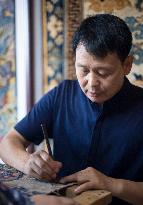
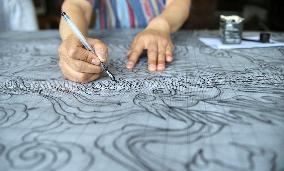
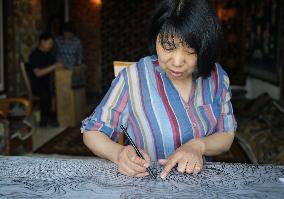
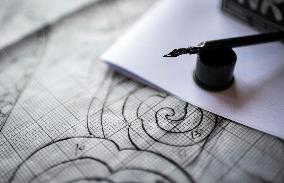
(240629) -- BEIJING, June 29, 2024 Photo by Xinhua/ABACAPRESS.COM) -- Ji Yu draws a design pattern for a palace carpet at her studio in Beijing, capital of China, June 27, 2024. Beijing palace carpet is a splendid example of China's traditional carpet weaving techniques. Known for its intricate production processes and beautiful patterns, the palace carpet represents the pinnacle of Chinese weaving artistry. The production involves four main steps: dyeing with traditional Chinese herbs, pattern design, weaving and shaping, and finally, finishing touches. As one of the "Beijing Eight Imperial Handicrafts," the art of palace carpet was designated a national intangible cultural heritage in 2008. Ji Yu, born in 1971 in central China's Henan Province, has dedicated over 30 years to the repair and creation of traditional palace carpets. In 1995, along with her husband Li Dongyang, she moved to Beijing to specialize in restoring ancient carpets. Over the years, the couple has insisted on traditional dyeing and weavi

  •  
(MASTER OF CRAFTS) CHINA-BEIJING-PALACE CARPET-INHERITOR-STUDIO (CN)

(MASTER OF CRAFTS) CHINA-BEIJING-PALACE CARPET-INHERITOR-STUDIO (CN)

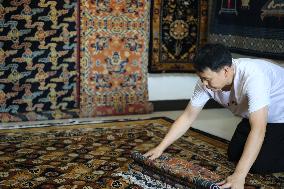
(240629) -- BEIJING, June 29, 2024 Photo by Xinhua/ABACAPRESS.COM) -- Ji Yu's husband Li Dongyang shows a palace carpet at her studio in Beijing, capital of China, June 27, 2024. Beijing palace carpet is a splendid example of China's traditional carpet weaving techniques. Known for its intricate production processes and beautiful patterns, the palace carpet represents the pinnacle of Chinese weaving artistry. The production involves four main steps: dyeing with traditional Chinese herbs, pattern design, weaving and shaping, and finally, finishing touches. As one of the "Beijing Eight Imperial Handicrafts," the art of palace carpet was designated a national intangible cultural heritage in 2008. Ji Yu, born in 1971 in central China's Henan Province, has dedicated over 30 years to the repair and creation of traditional palace carpets. In 1995, along with her husband Li Dongyang, she moved to Beijing to specialize in restoring ancient carpets. Over the years, the couple has insisted on traditional dyeing and weav

  •  
(MASTER OF CRAFTS) CHINA-BEIJING-PALACE CARPET-INHERITOR-STUDIO (CN)

(MASTER OF CRAFTS) CHINA-BEIJING-PALACE CARPET-INHERITOR-STUDIO (CN)

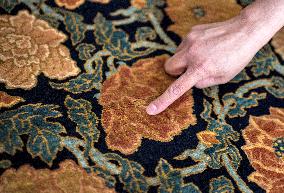
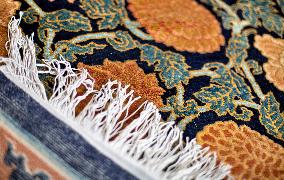
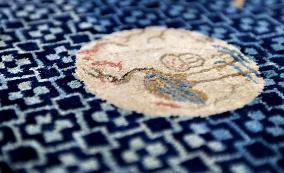
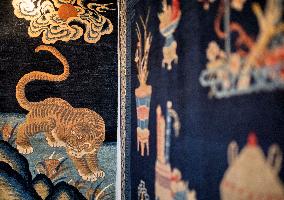
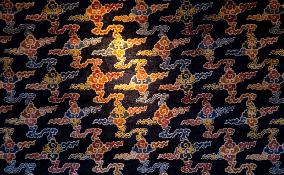
(240629) -- BEIJING, June 29, 2024 Photo by Xinhua/ABACAPRESS.COM) -- This photo taken on June 27, 2024 shows a detail of a palace carpet displayed at the studio of Ji Yu in Beijing, capital of China. Beijing palace carpet is a splendid example of China's traditional carpet weaving techniques. Known for its intricate production processes and beautiful patterns, the palace carpet represents the pinnacle of Chinese weaving artistry. The production involves four main steps: dyeing with traditional Chinese herbs, pattern design, weaving and shaping, and finally, finishing touches. As one of the "Beijing Eight Imperial Handicrafts," the art of palace carpet was designated a national intangible cultural heritage in 2008. Ji Yu, born in 1971 in central China's Henan Province, has dedicated over 30 years to the repair and creation of traditional palace carpets. In 1995, along with her husband Li Dongyang, she moved to Beijing to specialize in restoring ancient carpets. Over the years, the couple has insisted on tradi

  •  
(MASTER OF CRAFTS) CHINA-BEIJING-PALACE CARPET-INHERITOR-STUDIO (CN)

(MASTER OF CRAFTS) CHINA-BEIJING-PALACE CARPET-INHERITOR-STUDIO (CN)

(240629) -- BEIJING, June 29, 2024 Photo by Xinhua/ABACAPRESS.COM) -- This photo taken on June 27, 2024 shows the design pattern for a palace carpet displayed at the studio of Ji Yu in Beijing, capital of China. Beijing palace carpet is a splendid example of China's traditional carpet weaving techniques. Known for its intricate production processes and beautiful patterns, the palace carpet represents the pinnacle of Chinese weaving artistry. The production involves four main steps: dyeing with traditional Chinese herbs, pattern design, weaving and shaping, and finally, finishing touches. As one of the "Beijing Eight Imperial Handicrafts," the art of palace carpet was designated a national intangible cultural heritage in 2008. Ji Yu, born in 1971 in central China's Henan Province, has dedicated over 30 years to the repair and creation of traditional palace carpets. In 1995, along with her husband Li Dongyang, she moved to Beijing to specialize in restoring ancient carpets. Over the years, the couple has insist

  •  
(MASTER OF CRAFTS) CHINA-BEIJING-PALACE CARPET-INHERITOR-STUDIO (CN)

(MASTER OF CRAFTS) CHINA-BEIJING-PALACE CARPET-INHERITOR-STUDIO (CN)

(240629) -- BEIJING, June 29, 2024 Photo by Xinhua/ABACAPRESS.COM) -- This photo taken on June 27, 2024 shows a palace carpet displayed at the studio of Ji Yu in Beijing, capital of China. Beijing palace carpet is a splendid example of China's traditional carpet weaving techniques. Known for its intricate production processes and beautiful patterns, the palace carpet represents the pinnacle of Chinese weaving artistry. The production involves four main steps: dyeing with traditional Chinese herbs, pattern design, weaving and shaping, and finally, finishing touches. As one of the "Beijing Eight Imperial Handicrafts," the art of palace carpet was designated a national intangible cultural heritage in 2008. Ji Yu, born in 1971 in central China's Henan Province, has dedicated over 30 years to the repair and creation of traditional palace carpets. In 1995, along with her husband Li Dongyang, she moved to Beijing to specialize in restoring ancient carpets. Over the years, the couple has insisted on traditional dyein

  •  
(MASTER OF CRAFTS) CHINA-BEIJING-PALACE CARPET-INHERITOR-STUDIO (CN)

(MASTER OF CRAFTS) CHINA-BEIJING-PALACE CARPET-INHERITOR-STUDIO (CN)

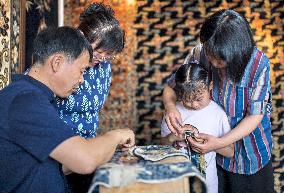
(240629) -- BEIJING, June 29, 2024 Photo by Xinhua/ABACAPRESS.COM) -- Ji Yu's husband Li Dongyang (L) repairs a palace carpet with Wang Guoying standing by at Ji Yu's studio in Beijing, capital of China, June 27, 2024. Beijing palace carpet is a splendid example of China's traditional carpet weaving techniques. Known for its intricate production processes and beautiful patterns, the palace carpet represents the pinnacle of Chinese weaving artistry. The production involves four main steps: dyeing with traditional Chinese herbs, pattern design, weaving and shaping, and finally, finishing touches. As one of the "Beijing Eight Imperial Handicrafts," the art of palace carpet was designated a national intangible cultural heritage in 2008. Ji Yu, born in 1971 in central China's Henan Province, has dedicated over 30 years to the repair and creation of traditional palace carpets. In 1995, along with her husband Li Dongyang, she moved to Beijing to specialize in restoring ancient carpets. Over the years, the couple has

  •  
(MASTER OF CRAFTS) CHINA-BEIJING-PALACE CARPET-INHERITOR-STUDIO (CN)

(MASTER OF CRAFTS) CHINA-BEIJING-PALACE CARPET-INHERITOR-STUDIO (CN)

(240629) -- BEIJING, June 29, 2024 Photo by Xinhua/ABACAPRESS.COM) -- This undated photo shows Ji Yu weaving a palace carpet at her factory in central China's Henan Province. Beijing palace carpet is a splendid example of China's traditional carpet weaving techniques. Known for its intricate production processes and beautiful patterns, the palace carpet represents the pinnacle of Chinese weaving artistry. The production involves four main steps: dyeing with traditional Chinese herbs, pattern design, weaving and shaping, and finally, finishing touches. As one of the "Beijing Eight Imperial Handicrafts," the art of palace carpet was designated a national intangible cultural heritage in 2008. Ji Yu, born in 1971 in central China's Henan Province, has dedicated over 30 years to the repair and creation of traditional palace carpets. In 1995, along with her husband Li Dongyang, she moved to Beijing to specialize in restoring ancient carpets. Over the years, the couple has insisted on traditional dyeing and weaving

  •  
(MASTER OF CRAFTS) CHINA-BEIJING-PALACE CARPET-INHERITOR-STUDIO (CN)

(MASTER OF CRAFTS) CHINA-BEIJING-PALACE CARPET-INHERITOR-STUDIO (CN)

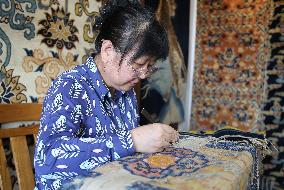
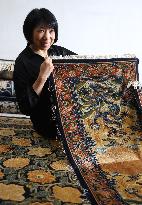
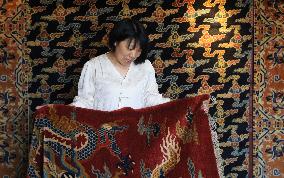
(240629) -- BEIJING, June 29, 2024 Photo by Xinhua/ABACAPRESS.COM) -- Ji Yu shows a palace carpet at her studio in Beijing, capital of China, June 27, 2024. Beijing palace carpet is a splendid example of China's traditional carpet weaving techniques. Known for its intricate production processes and beautiful patterns, the palace carpet represents the pinnacle of Chinese weaving artistry. The production involves four main steps: dyeing with traditional Chinese herbs, pattern design, weaving and shaping, and finally, finishing touches. As one of the "Beijing Eight Imperial Handicrafts," the art of palace carpet was designated a national intangible cultural heritage in 2008. Ji Yu, born in 1971 in central China's Henan Province, has dedicated over 30 years to the repair and creation of traditional palace carpets. In 1995, along with her husband Li Dongyang, she moved to Beijing to specialize in restoring ancient carpets. Over the years, the couple has insisted on traditional dyeing and weaving techniques. During

  •  
(MASTER OF CRAFTS) CHINA-BEIJING-PALACE CARPET-INHERITOR-STUDIO (CN)

(MASTER OF CRAFTS) CHINA-BEIJING-PALACE CARPET-INHERITOR-STUDIO (CN)

(240629) -- BEIJING, June 29, 2024 Photo by Xinhua/ABACAPRESS.COM) -- Ji Yu draws a pattern for a palace carpet at her studio in Beijing, capital of China, June 27, 2024. Beijing palace carpet is a splendid example of China's traditional carpet weaving techniques. Known for its intricate production processes and beautiful patterns, the palace carpet represents the pinnacle of Chinese weaving artistry. The production involves four main steps: dyeing with traditional Chinese herbs, pattern design, weaving and shaping, and finally, finishing touches. As one of the "Beijing Eight Imperial Handicrafts," the art of palace carpet was designated a national intangible cultural heritage in 2008. Ji Yu, born in 1971 in central China's Henan Province, has dedicated over 30 years to the repair and creation of traditional palace carpets. In 1995, along with her husband Li Dongyang, she moved to Beijing to specialize in restoring ancient carpets. Over the years, the couple has insisted on traditional dyeing and weaving tech

  •  
(MASTER OF CRAFTS) CHINA-BEIJING-PALACE CARPET-INHERITOR-STUDIO (CN)

(MASTER OF CRAFTS) CHINA-BEIJING-PALACE CARPET-INHERITOR-STUDIO (CN)

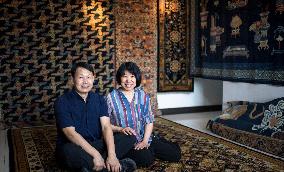
(240629) -- BEIJING, June 29, 2024 Photo by Xinhua/ABACAPRESS.COM) -- Ji Yu poses for a photo with her husband Li Dongyang at her studio in Beijing, capital of China, June 27, 2024. Beijing palace carpet is a splendid example of China's traditional carpet weaving techniques. Known for its intricate production processes and beautiful patterns, the palace carpet represents the pinnacle of Chinese weaving artistry. The production involves four main steps: dyeing with traditional Chinese herbs, pattern design, weaving and shaping, and finally, finishing touches. As one of the "Beijing Eight Imperial Handicrafts," the art of palace carpet was designated a national intangible cultural heritage in 2008. Ji Yu, born in 1971 in central China's Henan Province, has dedicated over 30 years to the repair and creation of traditional palace carpets. In 1995, along with her husband Li Dongyang, she moved to Beijing to specialize in restoring ancient carpets. Over the years, the couple has insisted on traditional dyeing and w

  •  
(MASTER OF CRAFTS) CHINA-BEIJING-PALACE CARPET-INHERITOR-STUDIO (CN)

(MASTER OF CRAFTS) CHINA-BEIJING-PALACE CARPET-INHERITOR-STUDIO (CN)

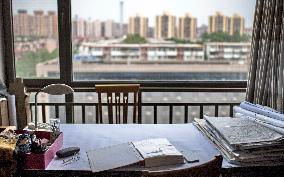
(240629) -- BEIJING, June 29, 2024 Photo by Xinhua/ABACAPRESS.COM) -- This photo taken on June 27, 2024 shows a scene at the studio of Ji Yu in Beijing, capital of China. Beijing palace carpet is a splendid example of China's traditional carpet weaving techniques. Known for its intricate production processes and beautiful patterns, the palace carpet represents the pinnacle of Chinese weaving artistry. The production involves four main steps: dyeing with traditional Chinese herbs, pattern design, weaving and shaping, and finally, finishing touches. As one of the "Beijing Eight Imperial Handicrafts," the art of palace carpet was designated a national intangible cultural heritage in 2008. Ji Yu, born in 1971 in central China's Henan Province, has dedicated over 30 years to the repair and creation of traditional palace carpets. In 1995, along with her husband Li Dongyang, she moved to Beijing to specialize in restoring ancient carpets. Over the years, the couple has insisted on traditional dyeing and weaving tech

  •  
(MASTER OF CRAFTS) CHINA-BEIJING-PALACE CARPET-INHERITOR-STUDIO (CN)

(MASTER OF CRAFTS) CHINA-BEIJING-PALACE CARPET-INHERITOR-STUDIO (CN)

(240629) -- BEIJING, June 29, 2024 Photo by Xinhua/ABACAPRESS.COM) -- A design pattern of palace carpet is seen at the studio of Ji Yu in Beijing, capital of China, June 27, 2024. Beijing palace carpet is a splendid example of China's traditional carpet weaving techniques. Known for its intricate production processes and beautiful patterns, the palace carpet represents the pinnacle of Chinese weaving artistry. The production involves four main steps: dyeing with traditional Chinese herbs, pattern design, weaving and shaping, and finally, finishing touches. As one of the "Beijing Eight Imperial Handicrafts," the art of palace carpet was designated a national intangible cultural heritage in 2008. Ji Yu, born in 1971 in central China's Henan Province, has dedicated over 30 years to the repair and creation of traditional palace carpets. In 1995, along with her husband Li Dongyang, she moved to Beijing to specialize in restoring ancient carpets. Over the years, the couple has insisted on traditional dyeing and wea

  •  
(MASTER OF CRAFTS) CHINA-BEIJING-PALACE CARPET-INHERITOR-STUDIO (CN)

(MASTER OF CRAFTS) CHINA-BEIJING-PALACE CARPET-INHERITOR-STUDIO (CN)

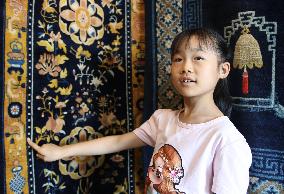
(240629) -- BEIJING, June 29, 2024 Photo by Xinhua/ABACAPRESS.COM) -- Ji Yu's daughter shows a palace carpet at Ji Yu's studio in Beijing, capital of China, June 27, 2024. Beijing palace carpet is a splendid example of China's traditional carpet weaving techniques. Known for its intricate production processes and beautiful patterns, the palace carpet represents the pinnacle of Chinese weaving artistry. The production involves four main steps: dyeing with traditional Chinese herbs, pattern design, weaving and shaping, and finally, finishing touches. As one of the "Beijing Eight Imperial Handicrafts," the art of palace carpet was designated a national intangible cultural heritage in 2008. Ji Yu, born in 1971 in central China's Henan Province, has dedicated over 30 years to the repair and creation of traditional palace carpets. In 1995, along with her husband Li Dongyang, she moved to Beijing to specialize in restoring ancient carpets. Over the years, the couple has insisted on traditional dyeing and weaving tec

  •  
(MASTER OF CRAFTS) CHINA-BEIJING-PALACE CARPET-INHERITOR-STUDIO (CN)

(MASTER OF CRAFTS) CHINA-BEIJING-PALACE CARPET-INHERITOR-STUDIO (CN)

(240629) -- BEIJING, June 29, 2024 Photo by Xinhua/ABACAPRESS.COM) -- This photo taken on June 27, 2024 shows a detail of a palace carpet displayed at the studio of Ji Yu in Beijing, capital of China. Beijing palace carpet is a splendid example of China's traditional carpet weaving techniques. Known for its intricate production processes and beautiful patterns, the palace carpet represents the pinnacle of Chinese weaving artistry. The production involves four main steps: dyeing with traditional Chinese herbs, pattern design, weaving and shaping, and finally, finishing touches. As one of the "Beijing Eight Imperial Handicrafts," the art of palace carpet was designated a national intangible cultural heritage in 2008. Ji Yu, born in 1971 in central China's Henan Province, has dedicated over 30 years to the repair and creation of traditional palace carpets. In 1995, along with her husband Li Dongyang, she moved to Beijing to specialize in restoring ancient carpets. Over the years, the couple has insisted on tradi

  •  
(MASTER OF CRAFTS) CHINA-BEIJING-PALACE CARPET-INHERITOR-STUDIO (CN)

(MASTER OF CRAFTS) CHINA-BEIJING-PALACE CARPET-INHERITOR-STUDIO (CN)

(240629) -- BEIJING, June 29, 2024 Photo by Xinhua/ABACAPRESS.COM) -- Ji Yu's husband Li Dongyang repairs a palace carpet at her studio in Beijing, capital of China, June 27, 2024. Beijing palace carpet is a splendid example of China's traditional carpet weaving techniques. Known for its intricate production processes and beautiful patterns, the palace carpet represents the pinnacle of Chinese weaving artistry. The production involves four main steps: dyeing with traditional Chinese herbs, pattern design, weaving and shaping, and finally, finishing touches. As one of the "Beijing Eight Imperial Handicrafts," the art of palace carpet was designated a national intangible cultural heritage in 2008. Ji Yu, born in 1971 in central China's Henan Province, has dedicated over 30 years to the repair and creation of traditional palace carpets. In 1995, along with her husband Li Dongyang, she moved to Beijing to specialize in restoring ancient carpets. Over the years, the couple has insisted on traditional dyeing and we

  •  
(MASTER OF CRAFTS) CHINA-BEIJING-PALACE CARPET-INHERITOR-STUDIO (CN)

(MASTER OF CRAFTS) CHINA-BEIJING-PALACE CARPET-INHERITOR-STUDIO (CN)

(240629) -- BEIJING, June 29, 2024 Photo by Xinhua/ABACAPRESS.COM) -- This photo taken on June 27, 2024 shows the details of a palace carpet displayed at the studio of Ji Yu in Beijing, capital of China. Beijing palace carpet is a splendid example of China's traditional carpet weaving techniques. Known for its intricate production processes and beautiful patterns, the palace carpet represents the pinnacle of Chinese weaving artistry. The production involves four main steps: dyeing with traditional Chinese herbs, pattern design, weaving and shaping, and finally, finishing touches. As one of the "Beijing Eight Imperial Handicrafts," the art of palace carpet was designated a national intangible cultural heritage in 2008. Ji Yu, born in 1971 in central China's Henan Province, has dedicated over 30 years to the repair and creation of traditional palace carpets. In 1995, along with her husband Li Dongyang, she moved to Beijing to specialize in restoring ancient carpets. Over the years, the couple has insisted on tr

  •  
(MASTER OF CRAFTS) CHINA-BEIJING-PALACE CARPET-INHERITOR-STUDIO (CN)

(MASTER OF CRAFTS) CHINA-BEIJING-PALACE CARPET-INHERITOR-STUDIO (CN)

(240629) -- BEIJING, June 29, 2024 Photo by Xinhua/ABACAPRESS.COM) -- Ji Yu's husband Li Dongyang (1st L) repairs a palace carpet while Wang Guoying (2nd L), Ji Yu (1st, R) and Ji Yu's daughter look on in Beijing, capital of China, June 27, 2024. Beijing palace carpet is a splendid example of China's traditional carpet weaving techniques. Known for its intricate production processes and beautiful patterns, the palace carpet represents the pinnacle of Chinese weaving artistry. The production involves four main steps: dyeing with traditional Chinese herbs, pattern design, weaving and shaping, and finally, finishing touches. As one of the "Beijing Eight Imperial Handicrafts," the art of palace carpet was designated a national intangible cultural heritage in 2008. Ji Yu, born in 1971 in central China's Henan Province, has dedicated over 30 years to the repair and creation of traditional palace carpets. In 1995, along with her husband Li Dongyang, she moved to Beijing to specialize in restoring ancient carpets. Ov

  •  
(MASTER OF CRAFTS) CHINA-BEIJING-PALACE CARPET-INHERITOR-STUDIO (CN)

(MASTER OF CRAFTS) CHINA-BEIJING-PALACE CARPET-INHERITOR-STUDIO (CN)

(240629) -- BEIJING, June 29, 2024 Photo by Xinhua/ABACAPRESS.COM) -- Ji Yu's husband Li Dongyang arranges palace carpets at her studio in Beijing, capital of China, June 27, 2024. Beijing palace carpet is a splendid example of China's traditional carpet weaving techniques. Known for its intricate production processes and beautiful patterns, the palace carpet represents the pinnacle of Chinese weaving artistry. The production involves four main steps: dyeing with traditional Chinese herbs, pattern design, weaving and shaping, and finally, finishing touches. As one of the "Beijing Eight Imperial Handicrafts," the art of palace carpet was designated a national intangible cultural heritage in 2008. Ji Yu, born in 1971 in central China's Henan Province, has dedicated over 30 years to the repair and creation of traditional palace carpets. In 1995, along with her husband Li Dongyang, she moved to Beijing to specialize in restoring ancient carpets. Over the years, the couple has insisted on traditional dyeing and we

  •  
(MASTER OF CRAFTS) CHINA-BEIJING-PALACE CARPET-INHERITOR-STUDIO (CN)

(MASTER OF CRAFTS) CHINA-BEIJING-PALACE CARPET-INHERITOR-STUDIO (CN)

(240629) -- BEIJING, June 29, 2024 Photo by Xinhua/ABACAPRESS.COM) -- This photo taken on June 27, 2024 shows a detail of a palace carpet displayed at the studio of Ji Yu in Beijing, capital of China. Beijing palace carpet is a splendid example of China's traditional carpet weaving techniques. Known for its intricate production processes and beautiful patterns, the palace carpet represents the pinnacle of Chinese weaving artistry. The production involves four main steps: dyeing with traditional Chinese herbs, pattern design, weaving and shaping, and finally, finishing touches. As one of the "Beijing Eight Imperial Handicrafts," the art of palace carpet was designated a national intangible cultural heritage in 2008. Ji Yu, born in 1971 in central China's Henan Province, has dedicated over 30 years to the repair and creation of traditional palace carpets. In 1995, along with her husband Li Dongyang, she moved to Beijing to specialize in restoring ancient carpets. Over the years, the couple has insisted on tradi

  •  
(MASTER OF CRAFTS) CHINA-BEIJING-PALACE CARPET-INHERITOR-STUDIO (CN)

(MASTER OF CRAFTS) CHINA-BEIJING-PALACE CARPET-INHERITOR-STUDIO (CN)

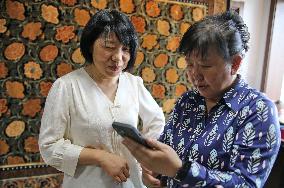
(240629) -- BEIJING, June 29, 2024 Photo by Xinhua/ABACAPRESS.COM) -- Ji Yu (L) and Wang Guoying discuss on the design patterns for a palace carpet in Beijing, capital of China, June 27, 2024. Beijing palace carpet is a splendid example of China's traditional carpet weaving techniques. Known for its intricate production processes and beautiful patterns, the palace carpet represents the pinnacle of Chinese weaving artistry. The production involves four main steps: dyeing with traditional Chinese herbs, pattern design, weaving and shaping, and finally, finishing touches. As one of the "Beijing Eight Imperial Handicrafts," the art of palace carpet was designated a national intangible cultural heritage in 2008. Ji Yu, born in 1971 in central China's Henan Province, has dedicated over 30 years to the repair and creation of traditional palace carpets. In 1995, along with her husband Li Dongyang, she moved to Beijing to specialize in restoring ancient carpets. Over the years, the couple has insisted on traditional d

  •  
(MASTER OF CRAFTS) CHINA-BEIJING-PALACE CARPET-INHERITOR-STUDIO (CN)

(MASTER OF CRAFTS) CHINA-BEIJING-PALACE CARPET-INHERITOR-STUDIO (CN)

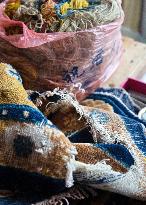
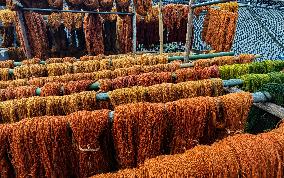
(240629) -- BEIJING, June 29, 2024 Photo by Xinhua/ABACAPRESS.COM) -- This undated photo shows materials dyed with Chinese herbs and medicines for making palace carpet at the factory of Ji Yu in central China's Henan Province. Beijing palace carpet is a splendid example of China's traditional carpet weaving techniques. Known for its intricate production processes and beautiful patterns, the palace carpet represents the pinnacle of Chinese weaving artistry. The production involves four main steps: dyeing with traditional Chinese herbs, pattern design, weaving and shaping, and finally, finishing touches. As one of the "Beijing Eight Imperial Handicrafts," the art of palace carpet was designated a national intangible cultural heritage in 2008. Ji Yu, born in 1971 in central China's Henan Province, has dedicated over 30 years to the repair and creation of traditional palace carpets. In 1995, along with her husband Li Dongyang, she moved to Beijing to specialize in restoring ancient carpets. Over the years, the co

  •  
(MASTER OF CRAFTS) CHINA-BEIJING-PALACE CARPET-INHERITOR-STUDIO (CN)

(MASTER OF CRAFTS) CHINA-BEIJING-PALACE CARPET-INHERITOR-STUDIO (CN)

(240629) -- BEIJING, June 29, 2024 Photo by Xinhua/ABACAPRESS.COM) -- Ji Yu shows a palace carpet at her studio in Beijing, capital of China, June 27, 2024. Beijing palace carpet is a splendid example of China's traditional carpet weaving techniques. Known for its intricate production processes and beautiful patterns, the palace carpet represents the pinnacle of Chinese weaving artistry. The production involves four main steps: dyeing with traditional Chinese herbs, pattern design, weaving and shaping, and finally, finishing touches. As one of the "Beijing Eight Imperial Handicrafts," the art of palace carpet was designated a national intangible cultural heritage in 2008. Ji Yu, born in 1971 in central China's Henan Province, has dedicated over 30 years to the repair and creation of traditional palace carpets. In 1995, along with her husband Li Dongyang, she moved to Beijing to specialize in restoring ancient carpets. Over the years, the couple has insisted on traditional dyeing and weaving techniques. During

  •  
(MASTER OF CRAFTS) CHINA-BEIJING-PALACE CARPET-INHERITOR-STUDIO (CN)

(MASTER OF CRAFTS) CHINA-BEIJING-PALACE CARPET-INHERITOR-STUDIO (CN)

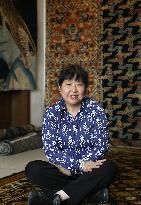
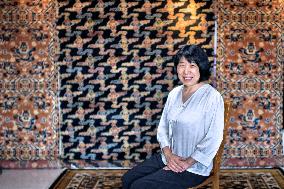
(240629) -- BEIJING, June 29, 2024 Photo by Xinhua/ABACAPRESS.COM) -- Ji Yu poses for a photo at her studio in Beijing, capital of China, June 27, 2024. Beijing palace carpet is a splendid example of China's traditional carpet weaving techniques. Known for its intricate production processes and beautiful patterns, the palace carpet represents the pinnacle of Chinese weaving artistry. The production involves four main steps: dyeing with traditional Chinese herbs, pattern design, weaving and shaping, and finally, finishing touches. As one of the "Beijing Eight Imperial Handicrafts," the art of palace carpet was designated a national intangible cultural heritage in 2008. Ji Yu, born in 1971 in central China's Henan Province, has dedicated over 30 years to the repair and creation of traditional palace carpets. In 1995, along with her husband Li Dongyang, she moved to Beijing to specialize in restoring ancient carpets. Over the years, the couple has insisted on traditional dyeing and weaving techniques. During the

  •  
(MASTER OF CRAFTS) CHINA-BEIJING-PALACE CARPET-INHERITOR-STUDIO (CN)

(MASTER OF CRAFTS) CHINA-BEIJING-PALACE CARPET-INHERITOR-STUDIO (CN)

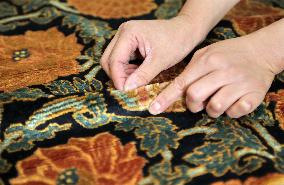
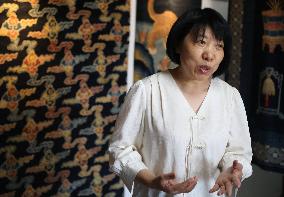
(240629) -- BEIJING, June 29, 2024 Photo by Xinhua/ABACAPRESS.COM) -- Ji Yu shows the details of a palace carpet at her studio in Beijing, capital of China, June 27, 2024. Beijing palace carpet is a splendid example of China's traditional carpet weaving techniques. Known for its intricate production processes and beautiful patterns, the palace carpet represents the pinnacle of Chinese weaving artistry. The production involves four main steps: dyeing with traditional Chinese herbs, pattern design, weaving and shaping, and finally, finishing touches. As one of the "Beijing Eight Imperial Handicrafts," the art of palace carpet was designated a national intangible cultural heritage in 2008. Ji Yu, born in 1971 in central China's Henan Province, has dedicated over 30 years to the repair and creation of traditional palace carpets. In 1995, along with her husband Li Dongyang, she moved to Beijing to specialize in restoring ancient carpets. Over the years, the couple has insisted on traditional dyeing and weaving tec

  •  
(MASTER OF CRAFTS) CHINA-BEIJING-PALACE CARPET-INHERITOR-STUDIO (CN)

(MASTER OF CRAFTS) CHINA-BEIJING-PALACE CARPET-INHERITOR-STUDIO (CN)

(240629) -- BEIJING, June 29, 2024 Photo by Xinhua/ABACAPRESS.COM) -- Ji Yu talks about palace carpet weaving at her studio in Beijing, capital of China, June 27, 2024. Beijing palace carpet is a splendid example of China's traditional carpet weaving techniques. Known for its intricate production processes and beautiful patterns, the palace carpet represents the pinnacle of Chinese weaving artistry. The production involves four main steps: dyeing with traditional Chinese herbs, pattern design, weaving and shaping, and finally, finishing touches. As one of the "Beijing Eight Imperial Handicrafts," the art of palace carpet was designated a national intangible cultural heritage in 2008. Ji Yu, born in 1971 in central China's Henan Province, has dedicated over 30 years to the repair and creation of traditional palace carpets. In 1995, along with her husband Li Dongyang, she moved to Beijing to specialize in restoring ancient carpets. Over the years, the couple has insisted on traditional dyeing and weaving techni

  •  
(MASTER OF CRAFTS) CHINA-BEIJING-PALACE CARPET-INHERITOR-STUDIO (CN)

(MASTER OF CRAFTS) CHINA-BEIJING-PALACE CARPET-INHERITOR-STUDIO (CN)

(240629) -- BEIJING, June 29, 2024 Photo by Xinhua/ABACAPRESS.COM) -- Ji Yu's husband Li Dongyang repairs a palace carpet at her studio in Beijing, capital of China, June 27, 2024. Beijing palace carpet is a splendid example of China's traditional carpet weaving techniques. Known for its intricate production processes and beautiful patterns, the palace carpet represents the pinnacle of Chinese weaving artistry. The production involves four main steps: dyeing with traditional Chinese herbs, pattern design, weaving and shaping, and finally, finishing touches. As one of the "Beijing Eight Imperial Handicrafts," the art of palace carpet was designated a national intangible cultural heritage in 2008. Ji Yu, born in 1971 in central China's Henan Province, has dedicated over 30 years to the repair and creation of traditional palace carpets. In 1995, along with her husband Li Dongyang, she moved to Beijing to specialize in restoring ancient carpets. Over the years, the couple has insisted on traditional dyeing and we

  •  

Dyeing with yellow turmeric

STORY: Dyeing with yellow turmeric SHOOTING TIME: June 12, 2024 DATELINE: June 14, 2024 LENGTH: 00:00:11 LOCATION: KUNMING, China CATEGORY: SOCIETY SHOTLIST: 1. various of dyeing STORYLINE: Yellow turmeric, a traditional dyeing material, integrates with modern aesthetics and brings new life to traditional Chinese colors in southwest China's Yunnan. Xinhua News Agency correspondents reporting from Kunming, China. (XHTV)

  •  
CHINA-ZHEJIANG-JIAXING-SPRING-SCENERY (CN)

CHINA-ZHEJIANG-JIAXING-SPRING-SCENERY (CN)

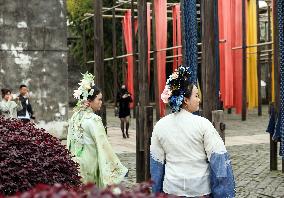
(240418) -- JIAXING(ZHEJIANG), April 18, 2024 (Xinhua) -- Tourists donning traditional attire visit a dyeing house in the water town Wuzhen in Jiaxing City, east China's Zhejiang Province, April 11, 2024. Located in east China's Zhejiang Province, the waterside city Jiaxing is renowned for tourist destinations Nanhu Lake and Wuzhen. In the breezy month of April, the two tourist hotspots come alive with the gentle touch of spring. Nanhu Lake, with its shimmering waters and willow trees swaying along the lakeside, is a sight to behold. The historic water town Wuzhen also enchants with its emerald waters and whitewashed walls adorned with black tiled roofs. Visitors can immerse themselves in the scenery by donning traditional Hanfu attire and leisurely gliding along the river on rowing boats. The juxtaposition of ancient dwellings, stone bridges, and willow trees along the riverbanks resembles scenes from a classical ink painting, transporting visitors to a bygone era. (Xinhua/Lan Hongguang)

  • Main
  • Top
  • Editorial
  • Creative
  • About Us
  • About ILG
  • Terms of use
  • Company
  • BEHIND
  • Price List
  • Single Plan
  • Monthly Plan
  • Services
  • Shooting
  • Rights Clearance
  • Support
  • FAQ
  • How To Buy
  • Contact Us
  • Become a Partner

© KYODO NEWS IMAGES INC

All Rights Reserved.

  • Editorial
  • Olympics
  • News
  • Sports
  • Japan
  • Tech
  • Royal
  • Disaster
  • NorthKorea
  • Old Japan
  • SNS
  • Creative
  • Food
  • Japan
  • Landscape
  • Animal
  • Popular
  • #Ukraine
  • #Thailand
  • #coronavirus
  • #N. Korea
  • #China
  • #Russia
  • #Ukraine
  • #Thailand
  • #coronavirus
  • #N. Korea
  • #China
  • #Russia
  • Food
  • Japan
  • Landscape
  • Animal
  • Olympics
  • News
  • Sports
  • Japan
  • Tech
  • Royal
  • Disaster
  • NorthKorea
  • Old Japan
  • SNS